

 English
 русский
 中文简体
中文简体 Español

Husqvarna Mower Blade Replacement: Buyer's Guide
08 07, 2026
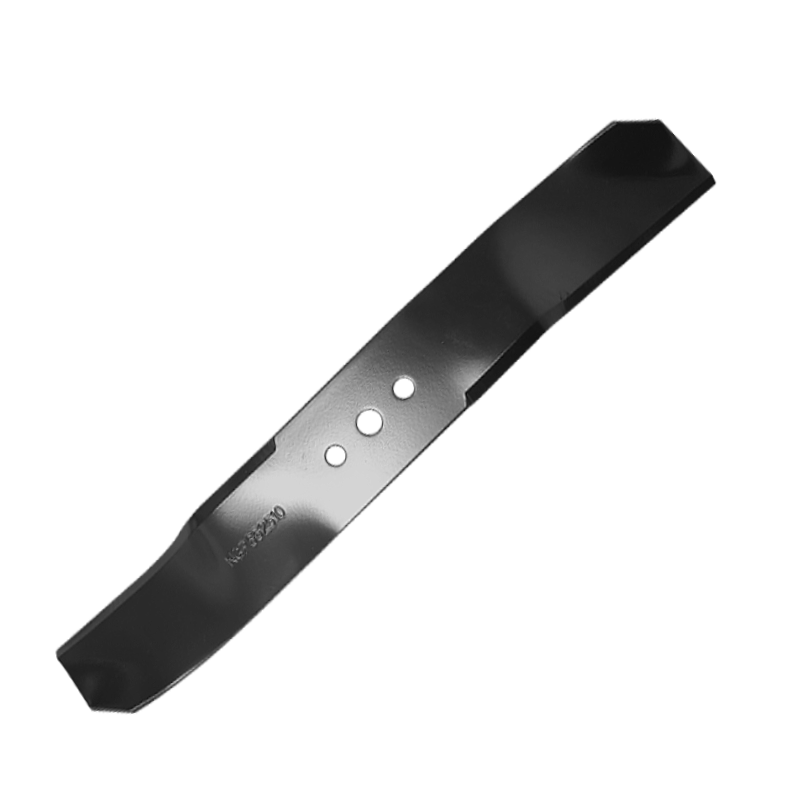
A Husqvarna mower blade replacement is a precision-manufactured cutting component built to restore the cutting sharpness, balance, and safety of a worn or damaged original blade. For landscaping crews, golf courses, and repair shops, the right replacement blade is the single fastest way to bring a tired mower back to factory-level cutting quality.
Cutting performance does not fail all at once. It erodes blade pass by blade pass, until torn grass tips, uneven stripes, and rising fuel or battery draw make the problem impossible to ignore. Knowing exactly what to check before buying a Husqvarna mower blade replacement saves both money and downtime.
30% more fuel or battery draw from a dull blade
2-3x passes needed to fix uneven cutting
5 core specs that determine fit
1. Signs Your Mower Needs a Blade Replacement
A blade rarely announces its own failure with a warning light. Instead, it shows up in the lawn itself and in how hard the machine has to work to cut it.
- 01 Ragged, brown grass tips — a sign the edge is dull rather than slicing cleanly.
- 02 Visible bends, nicks, or cracks — structural damage that risks blade failure mid-rotation.
- 03 Excess vibration during operation — usually caused by an unbalanced or worn blade.
- 04 Rising fuel or battery consumption — the motor compensating for a blade that no longer cuts efficiently.
2. Core Specifications That Determine the Right Fit
Every Husqvarna mower blade replacement must match the original blade on five measurable dimensions before it can be installed safely.
| Specification | Why It Matters |
| Blade length | Determines cutting swath and clearance inside the deck |
| Center hole diameter | Must match the spindle exactly for secure mounting |
| Thickness and material grade | Affects impact resistance and service life |
| Rotation direction | Incorrect direction reverses discharge and mulching performance |
| Lift type (high, low, mulching) | Controls grass discharge, mulching, and bagging behavior |
A mower blade is only as good as its weakest specification: even a hardened, sharp blade will vibrate, cut unevenly, or damage the spindle if the center hole or length is wrong.
3. Husqvarna Replacement Blades vs Generic Standard Blades
Not every blade sold as a fit is manufactured to the same tolerance. The gap between a model-specific replacement and a generic standard blade usually shows up in balance and edge retention, not in price alone.
Husqvarna-Compatible Replacement
- Dimensioned to the exact mower model
- Tighter balance tolerance out of the box
- Hardened steel with controlled heat treatment
- Direct bolt-on fit, no adjustment needed
Generic Standard Blade
- Sized to a general range, not one model
- Balance and hardness vary by batch
- May need filing or shimming to fit
- Shorter service life under heavy use
4. How a Quality Replacement Blade Is Manufactured
The manufacturing sequence behind a Husqvarna mower blade replacement determines how long its edge and balance will last in the field.
Steel Cutting and Forming
Carbon or alloy steel sheet is cut and press-formed into the blade profile.
Heat Treatment
Hardening and tempering raise wear resistance without making the steel brittle.
Grinding and Sharpening
The cutting edge is ground to a precise angle for a clean slicing action.
Balance and Coating
Each blade is balance-tested and finished with an anti-corrosion coating.
5. Choosing a Reliable Blade Supplier
For distributors and repair shops buying in volume, the manufacturer behind the blade matters as much as the blade's specifications.
- 01 Documented quality control — hardness testing and balance testing on every batch.
- 02 OEM and custom capability — able to match dimensions across multiple Husqvarna models.
- 03 Export and packaging experience — consistent supply for international distributors.
Frequently Asked Questions
How often should a Husqvarna mower blade be replaced?
Most residential blades need replacement once a season with regular use, while commercial mowers cutting daily may need a new blade every 4-8 weeks depending on soil and debris conditions.
Can I sharpen a blade instead of replacing it?
Sharpening restores the edge but not bends, cracks, or lost balance, so a Husqvarna mower blade replacement is the safer choice once physical damage is visible.
Do mulching and high-lift blades fit the same mower?
Only if the mower deck and specification allow that lift type; always match blade length, center hole, and lift type to the original before ordering.
What material lasts longest in commercial use?
Hardened alloy steel with proper heat treatment offers the best combination of edge retention and impact resistance for daily commercial mowing.
Свяжитесь с нами для получения коммерческого предложения и получайте первоочередной доступ к информации о новых продуктах
 Адрес:Северная часть дороги Гоань, Зона экономического развития, Уезд Гуандэ, Провинция Аньхой, Китай
Телефон: +86-13967663706
Эл. почта: [email protected]
Адрес:Северная часть дороги Гоань, Зона экономического развития, Уезд Гуандэ, Провинция Аньхой, Китай
Телефон: +86-13967663706
Эл. почта: [email protected]
Авторское право © 2025 Anhui Boxing Machinery Co., Ltd Все права защищены.Китайские промышленные лезвия для газонокосилок производители
